Critical flaw in Twitter’s code could let hackers take over your account

A security researcher discovered a critical vulnerability in the advertising code of Twitter, the most popular micro-blogging website in the world, which if exploited could let hackers publish updates from any other account without needing access to the victim’s profile.

The white-hat hacker, writing in a blog post this week (22 May), claimed to have uncovered the issue while exploring Twitter’s code for bugs. He said the flaw could give cybercriminals the ability to “publish entries in Twitter-network by any user of this service.”

The vulnerability was initially found on 26 February 2017 and fixed two days later.

The hacker, known as kedrisch, reported the flaw via Twitter’s bug bounty service – a programme managed by the organisation HackerOne which lets researchers disclose bugs in exchange for rewards.

In this instance, kedrisch was handed a bounty of $7,560 (₦2,872,800) for his efforts.

The issue he found was in Twitter’s advertising code. Essentially, the researcher said flaws existed in how the service’s media library uploaded files such as videos, images and gifs to the platform.

Rules surrounding the responsible disclosure programme mean the flaw is only coming to light now.

In a statement, Twitter said: “The reporter discovered a flaw in the handling of Twitter Ads Studio requests which allowed an attacker to tweet as any user.

“By sharing media with a victim user and then modifying the post request with the victim’s account ID the media in question would be posted from the victim’s account. This bug was patched […] and no evidence was found of the flaw being exploited by anyone other than the reporter.”

Charlie Miller, a security expert well-known for being part of the collective which remotely hacked a 2014 Jeep Cherokee, tweeted: “As former appsec [Application Security] tech lead for Twitter, I’ll just say I’m not shocked this was in code from the ads team.” He did not elaborate further.

 Last December, kedrisch was awarded $1,120 (₦425,600) for finding a less critical flaw which could let a hacker change comments on Twitter’s official forums. This was publicly disclosed on 12 May 2017.
Most recently, Twitter issued a warning to users of its Vine service that a bug potentially exposed users’ email addresses and phone numbers to unnamed third parties. In an email sent to all impacted Vine users, it said the bug affected the Vine Archive for “less than 24 hours”.
Vine was bought by Twitter back in 2012 however the company decided to shut down the popular short video publishing application earlier this year amid a period of heavy job cuts.

“We want to emphasise that this information can’t directly be used to access your account, and we have no information indicating that it has been misused,” Twitter’s email to Vine users stressed. “We take these incidents very seriously, and we’re sorry this occurred,” it added.

IBTimes

Why Companies Shouldn’t Try to Hack Their Hackers

During a recent cybersecurity competition, teams of students conducting a mock exercise unintentionally caused the U.S. to start a (fake) war. The students were given a variety of options, including diplomatic ones, for responding to a cyberattack by China. The majority of them took an aggressive approach, known as “hack back,” with disastrous consequences. The mock exercise shows how tempting it is to launch a counterstrike in response to a cyberattack — and the potential for significant unintended consequences.

As the CEO of a publicly traded security company, I would like to urge businesses and individuals to beware those very same dangers. In the United States, the Computer Fraud and Abuse Act (CFAA) prohibits private parties from accessing or damaging computer systems, even if they’re being used to attack you or your business.

But legislation in Congress would change that, giving private-sector businesses and individuals the right to strike back and hack their hackers. The idea behind the proposal is to empower people “to defend themselves online, just as they have the legal authority to do during a physical assault.” I believe the measure would do more harm than good. Here’s why.

Holes in the Self-defense Defense

It may sound reasonable that the same principle that allows homeowners to defend themselves against intruders, even if it involves causing harm to the attackers, should hold true for cyberattacks. But the reality is, unfortunately, that it would be akin to lobbing grenades from your front yard, hoping to get lucky and hit an attacker you haven’t seen as they flee the scene of the crime. Even if you do manage to hurt your attacker, you’ll likely hurt other people, too. In hack back, it’s almost impossible to ensure that an action targeted at a specific actor or group of actors will affect only the intended targets. After all, the internet is designed specifically for the purpose of systems interacting and communicating. Technology and users are increasingly interconnected.

It’s Difficult to Identify Your Attacker

Another significant challenge is that cyberattacks, which are sometimes discovered years after a security breach, are difficult to attribute to the correct actor. Hackers are constantly evolving their techniques to stay one step ahead of defenders and law enforcement. Sometimes they use deception techniques to plant indicators that point to some other perpetrator, either to throw off suspicion or to incriminate another party.

This is even more problematic when you consider that devices operating as unwilling parts of a botnet may be used to carry out an attack. These infected devices — and their owners — are as much victims of the attacker as the primary target, yet any attempt to hack back could cause them harm. Even governments, which possess the large-scale, sophisticated intelligence-gathering programs needed to accurately attribute cyberattacks, can take a long time to do so. Private-sector organizations typically do not have these resources.

Running Afoul of the Law of Proportionality

In the wake of a cyberattack, even if the attacker has been identified, it is difficult to judge motivation accurately and to determine an appropriate response. Remember the students competing in the mock cybersecurity exercise, the ones who ended up at war? They thought their response was proportional, but the situation quickly got out of hand.

Sometimes the need for information is used as an argument for hacking back. The argument is that it can help with intelligence gathering. However, intelligence gathering is not the same as mounting a digital counterstrike. There are a number of intelligence-gathering measures that U.S. organizations can take that do not run afoul of the CFAA. For example, organizations can deploy honeypots in their own networks to capture information on the attacker and their methods.

Essentially, hack back legislation would put the ability to launch cyberattacks, decide proportional responses, and infiltrate systems into the hands of companies and individuals. If hack back is legalized and private-sector companies have it in their arsenals, I fear it could become the de facto response — rather than considering the broad range of options that do not involve hacking back.

New Pressure on Company Resources

Clearly, hacking back effectively would require specialized skills and costly investments. Were it legalized with an authorization framework that is insufficiently stringent, I fear that many organizations may try to participate without the necessary tools and expertise to carry it out. That is likely to be ineffective, damaging, or both.

Other companies cannot afford a great deal of in-house security expertise and technologies to protect themselves today. Hack back capability is a nonstarter for them. That will make them even more vulnerable if hack back is legalized. Profit-motivated attackers may try to avoid companies that threaten to strike back. Instead, they’ll target the unfortunate organizations below this security poverty line.

Legal Landmines in a Lawless “Land”

While the internet is a borderless space accessed from every country in the world, each of those countries has its own legal system and expects its citizens to abide by it. It would be very risky for companies and individuals who hack back to avoid running afoul of the laws of another country and international law.

When national governments do this, it tends to occur within existing international legal frameworks and under some regulatory oversight. It must meet a stringent burden of proof for attribution. There are parameters determining the types of targets that can be pursued and which actions can be taken. Any hack back authorization would need considerable government oversight to avoid abuse by the private sector and minimize collateral damage.

For example, what if a company hacks back and accidentally hurts another company or individual? The company could incur expensive legal proceedings, reputational damage, and loss of trust. Making organizations exempt from this kind of legal action around unintended consequences is problematic. How could we spot and stop accidental or intentional abuses of the system? Giving the private sector hack back capability would require a complex legal framework and oversight system. Who would run it? How would it be funded? This seems impractical and costly.

It’s hard to blame companies for feeling helpless in the wake of cyberattacks that have shut factories, paralyzed hospitals, and publicized proprietary corporate data. From phishing scams to ransomware to vulnerabilities in medical devices, connected electronics, and even the entire power grid, no one likes to feel that they are constantly on the losing end of a shadowy war against clandestine cyberattackers, with no hope in sight. That feeling of helplessness is behind a growing call for companies to be able to hack back.

Yet the potential costs of a misstep and the unintended consequences should deter business leaders from undertaking such an effort. We must instead work together to find solutions to our complex cybersecurity problems that are better than legitimizing vigilantism, particularly given its significant risks and dubious benefits. It’s one thing for students to unintentionally trigger a disaster in the safe confines of a competitive mock scenario. It’s another thing entirely to be a business leader that does so in the real world.

Harvard Business Review

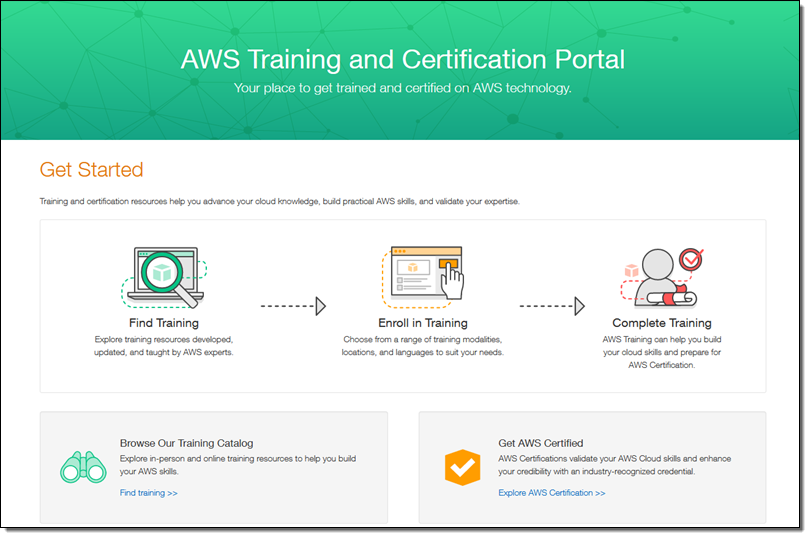
Amazon launches new training and certification portal to lure talent to AWS

As cloud services continue to pick up steam, Amazon wants to make sure there is no shortage of talent to maintain your cloud computing operations and take care of your AWS needs.

Yesterday, the e-commerce giant announced it is launching its own dedicated training and certification portal to offer aspiring ASW solution architects the opportunity to independently manage and monitor their progress in one convenient place.

“Previously, you had to rely on multiple websites to find and manage training and certification offerings,” Amazon said in a blog post.

“Now you have a central place where you can find and enroll in AWS Training, register for AWS Certification exams, track your learning progress, and access benefits based on the AWS Certifications you have achieved.”

Amazon hopes the move will make it easier for technical professionals to build up their AWS skills and advance towards earning an actual certification to back up their competence in the area.

To access the portal, you can create a new account or simply log in with your existing Amazon account. Owners of AWS Training accounts will have the option to migrate their existing training history to the new platform.

While the new training portal will certainly make it easier for ambitious AWS rookies to catch up with the latest and greatest trends and practices in managing cloud infrastructures, it is worth noting employers tend to bet on candidates that can back up their certifications with practical experience.

So make sure you have some actual working experience to compliment your glowing AWS training certifications if you really want to impress potential talent hunters.

Check out more details about the AWS Training and Certification portal here.

TnW

3 Cybersecurity Practices That Small Businesses Need to Consider Now

All businesses, regardless of size, are susceptible to a cyberattack. Anyone associated with a company, from executive to customer, can be a potential target. The hacking threat is particularly dangerous to small businesses who may not have the resources to protect against an attack let alone ransomware.

Norman Guadagno, a senior marketing officer at Carbonite, has said that “almost one in five small business owners say their company has had a loss of data in the past year,” with each data hack costing anything ranging $100,000 to $400,000 [about ₦37,500,000 to ₦150,000,000]. It, therefore, pays to understand cybersecurity to better protect you and your business.

Ransomeware Risks
Ransomware attacks can be especially devastating for small business owners. When hackers seize your data, encrypt it, and demand money in exchange for the key to unlock that data, you are truly at the mercy of the criminals.

Given that smaller businesses are likely to have weaker protection than larger ones, it is important that adequate steps are taken to properly secure your information. Ensure that software and hardware is up to date and change passwords often.

Cloud-Based Security
Using some sort of central data vault is a popular solution for business security. There are a great many companies which provide this service, from the large Nokia Networks to smaller bespoke groups.

The advantage of this approach is that you will have access to the cyber expertise of the vault company while also possessing a significant degree of control over the cloud system you will be using. The disadvantage is that adopting this approach does not make your company immune to hackers since there are points of attack either at the vault company or at your own. But you are at least in expert hands.

Biometric Security
Smartphones are already using thumbprints for user identification purposes, but 2017 promises to deliver even more advancements along these lines. Biometric systems will be able to analyze and evaluate every part of your company’s security features. Touch pads will have sensors able to identify a user from their computer habits like typing speed and even online browsing taste.

The Internet of Things (IoT) is such that security measures are under increasing scrutiny as multiple devices, over ever-expanding distances, can be linked together. This facilitates speedier data sharing and storage as the hardware (and the businesses using the hardware) becomes more familiar to users. But it also means that device-level security must be effective if it is to minimize the risk of an effective cyber attack – multiple-factor authentication is needed.

Increased Automation Assists Security Staff
Biometrics, the cloud, and the increasing prevalence of the IoT are signposting an expanding role for automation in cybersecurity. When the smart systems already mentioned combined with the human element of a security process, a strong deterrent against criminals can be created. Automated technology constantly reviews your protection arrangements, looking for possible gaps and plugging them. The use of these systems complements the work of your staff and safeguards your business against all but the most determined attackers.

Cybersecurity is evolving as it tries to keep pace with increasingly sophisticated hack attacks. This is why it is important to secure your business effectively by taking expert advice. The cost to businesses of cyberattacks is already monumental, and it is growing. Consumers are also becoming more aware of the dangers of computer crime and they will often take their custom to those businesses which take data security seriously. Being small is no excuse for businesses – they must pay heed to industry advice and ensure that they are properly protected against cybercrime in 2017.

Tech.co

Twitter co-founder: ‘Yeah, I’m sorry’ if Twitter helped Trump get elected

Twitter co-founder Evan Williams wants you to know he’s super sorry for any role the social media platform played in the election of President Donald Trump.

The sort-of apology was made in an interview with The New York Times published on Saturday. Williams’ remorse for possibly helping to create a political monster comes after Trump’s claims that Twitter was key in helping him clinch the election.

“I think that maybe I wouldn’t be here if it wasn’t for Twitter, because I get such a fake press, such a dishonest press,” Trump told Fox News in March.

The Times reports that Williams has only recently heard Trump’s claim for the first time, reflecting on it for a while before speaking out.

“It’s a very bad thing, Twitter’s role in that,” Williams told the Times. “If it’s true that he wouldn’t be president if it weren’t for Twitter, then yeah, I’m sorry.”

Trump’s use of Twitter has long been the source of criticism, especially now as he holds the highest office in the country. The Wall Street Journal reported earlier this week that Trump’s aides recently held a social media intervention with the president due to concerns his tweets could have political and legal ramifications.

The White House did not respond to a request for comment on Williams’ remarks, according to the Times

WATCH: Trump’s outrageous insults throughout his campaign

Hackers can get rich using your computer — and you’d never know it

It’s getting hard to read the news without hearing about another cyber attack making its way around the global internet.

A growing trend among cybercriminals is the kind of malware attack that infiltrates your network and works quietly in the background to perform tasks such as mining a digital currency and sending the profits back to the author of the virus while the host remains unaware.

This type of threat has been highlighted by the Adylkuzz attack which exploits the same Microsoft vulnerability as the WannaCry attack. However, where WannaCry seized files and ransomed them, Adylkuzz installs a cryptocurrency miner on compromised machines.

“These are not particularly unusual, we see a lot of malware that does cryptocurrency mining,” Nick Savvides, a security specialist at Symantec told News.com.au. “There’s a very big business in it.”

Such malware can often go undetected but will likely degrade a computer’s performance and speed.

“If criminals get it right it doesn’t chew up too many resources, just enough that it can deliver something,” and the infection can go undetected for long periods of time.

Given the rising value of many cryptocurrencies in recent months, “it’s possible to make quite a bit of money out of it without it being noticed,” Savvides said.

After security firm Proofpoint published a blog this week describing how the attack turns infected users into unwitting financial supporters of cyber criminals, some reports claimed the Adylkuzz malware could end up being a bigger attack than WannaCry which infected as many as 200,000 Windows systems in more the 150 countries. But Savvides disagrees.

“I just don’t see it. The reason I don’t see it is that this has been active for some time now, the rates of infection have been pretty low, and there hasn’t been an associated e-mail campaign to infect hosts,” he said.

Proofpoint said it has detected a number of infected machines that have transferred several thousand dollars worth of the cryptocurrency Monero to the creators of the virus dating back to as early as April 24.

Interestingly, once the malware exploits the Microsoft vulnerability, it shuts it down, thus denying anyone else the chance to do the same. “One bad guy making sure no one else can steal his host.”

These types of attacks share certain characteristics with the commonly used distributed denial of service (DDoS) attacks which also take control of unwitting hosts to direct their computer’s traffic at a particular network.

“In fact as a cybercriminal, you could dual purpose that botnet. You could go and infect thousands of hosts and utilize them to not just mine bitcoins for you but to also launch a denial of service attack for you,” Savvides said.

These kind of attacks “aren’t going away.”

So if your computer is running a little slower than usual, how can you check if it might possibly be compromised?

According to Savvides the only thing the average person can do to ensure they’re not the unwitting victim of such malware is to run a security tool like Norton Power Eraser which is a free virus and malware removal tool that people can run to clean their device.

“I think that’s really the only way for a layman to determine this,” he said.

New York Post

Coda Developer Panic Says Source Code for Several Apps Stolen via Handbrake Malware Attack

In a blog post on Wednesday, Panic Inc. developer and co-founder Steven Frank disclosed that he downloaded a malware infected version of HandBrake earlier this month, which led to the theft of the source code for several of the company’s popular apps.

In early May, a mirror download server hosting the popular video coding app Handbrake was hacked, and an infected version of the Handbrake app took the place of the genuine article. The hacked version infected user’s machines with OSX.PROTON, which gave hackers root-access privileges to a Mac.

Hacker’s were able to access Frank’s Mac via the infected app, and collected his login credentials, including his git credentials. Frank assures Panic customers that the hacker’s did not access customer data or sync data.

In a case of extraordinarily bad luck, even for a guy that has a lot of bad computer luck, I happened to download HandBrake in that three day window, and my work Mac got pwned.

Long story short, somebody, somewhere, now has quite a bit of source code to several of our apps.

Before I continue, three important points:

  • There’s no indication any customer information was obtained by the attacker.
  • Furthermore, there’s no indication Panic Sync data was accessed.
  • Finally, our web server was not compromised.

(As a reminder, we never store credit card numbers since we process them with Stripe, and all Panic Sync data is encrypted in such a way that even we can’t see it. Read more.)

Panic offers several popular apps, including web editor Coda, FTP app Transmit, SSH client Prompt, and more. The attackers have demanded a large ransom, to be paid via Bitcoin. Panic does not intend to pay the ransom.

Panics warns customers to only download Panic’s apps from the Panic website or the Mac App Store, as the stolen source code could potentially be used to create malware-laden versions of the software packages.

Panic has been in contact with both Apple and the FBI, and Apple’s team is on the lookout for any stolen or malware-infested versions of the Panic apps. The FBI is investigating the matter.

Frank asks that customers notify the company if they see any unofficial Panic apps available in the wild. Such apps are likely to be infected with malware in an attempt to spread their evil payload.

We’ll be working overtime for the foreseeable future to keep an eye on this situation.

But we could also use your help.

If you see any cracked or otherwise unofficial versions of our apps in the wild, it’s safest to assume they are infected, and we ask that you please let us know. If you see our source show up somewhere, also let us know. And if you have information that could help with the investigation into this incident, definitely let us know.

MacTrast

How to tell if you’ve been hacked by Russia, China, or North Korea

WannaCry had North Korea’s fingerprints all over it. The massive ransomware attack that hit over 150 countries last week reportedly contained code linked to other cyber crimes allegedly perpetrated by the Hermit Kingdom. But while it might take weeks or months for researchers to identify the culprit through forensic analyses, another set of clues already points to North Korea: motive.

There are rarely smoking guns when it comes to major cyber attacks, but clear patterns and evidence have emerged that indicate which foreign governments are responsible for the biggest ones. Would Russia or China have tried to take down hospitals in the U.K. for a measly $300? Probably not. China veers more towards stealing military and trade secrets, while Russia prefers operations that destabilize foreign governments. But North Korea will definitely hack for cash.

Here’s a quick guide to distinguishing cyber threats from North Korea, China, or Russia:

1. North Korea

Why are they attacking? What are their goals?

North Korea is a relative newcomer to the field of cyber warfare, yet it has quickly established itself as a formidable foe. The isolated country has long employed a strategy of asymmetrical warfare, so cyber attacks fit neatly into its preference for cheap, unpredictable operations that hold minimal risks of retaliation. Hit hard by sanctions, cash-strapped North Korea has recently shifted its cyber capabilities to generate income through theft and ransom — a strategy it might have just blown up to a global scale.

Who do they target?

Before the WannaCry attack, North Korea’s primary targets were South Korean banks and media companies as well as American corporations and international institutions. An attempted cyber attack on a Polish bank last year, for instance, inadvertently revealed that North Korea was also targeting the World Bank, the European Central Bank, and Bank of America. An indiscriminate attack like WannaCry might be a first, but it would hardly be surprising given their past behavior.

What do they take? How do they use it?

Even before it was implicated in the WannaCry attack, North Korea had taken to ransom. Last year, the country stole the personal data of more than 10 million customers from Interpark, a South Korean online retailer. Interpark was alerted to the breach after it received an anonymous message that demanded $2.7 million in bitcoin or else the attack would be publicized. Interpark refused to pay the ransom and alerted South Korean authorities. Interestingly, despite causing so much havoc, the WannaCry operation has seen relatively meager returns: Only about $70,000 in bitcoin has been netted to date.

North Korea’s most profitable operation, however, wasn’t ransomware at all, but a heist. Last year, it attempted to steal nearly $1 billion from a bank in Bangladesh, and successfully made off with $81 million.

All of the country’s attacks aren’t for money, though. Before WannaCry, its highest profile attack was on Sony Pictures Entertainment, when it infiltrated the company’s network in an attempt to stop the release of a comedy about the imagined assassination of North Korean leader Kim Jong Un. Hackers released a trove of embarrassing emails that were widely reported on. But what received less attention was the damage done to Sony’s systems. A highly destructive form of malware was introduced and over 70 percent of its computers were left inoperable.

How did they get in?

North Korea’s sophisticated cyber capabilities are surprising considering its extreme isolation and poor infrastructure. Given the country’s limited connectivity to the outside world, its massive army of hackers, estimated to be 1,700 strong, are allowed to live and work abroad, mostly in China, Southeast Asia, and Europe. The ability to live outside of North Korea is actually a major perk for hackers given how few opportunities there are to leave the barren country. As an added bonus, many North Korean hackers are allowed to run illegal gambling websites to earn additional income.

What’s next?

With the United States and other nations ratcheting up sanctions in response to North Korea’s growing nuclear program, it is likely that North Korean hackers will continue to generate cash from hacking. Whether it returns to targeted operations or tries another indiscriminate attack like WannaCry, though, remains to be seen.

2. China

Why are they attacking? What are their goals?

Chinese cyber attacks are closely aligned with China’s broader national goals of rapidly developing its economic and military might. To that end, Chinese cyber attacks have been aimed at gathering intelligence and stealing military and trade secrets, effectively saving China billions of dollars in research and development costs and helping it quickly catch up to the U.S. in certain key areas.

Who do they target?

China’s targets stretch across American businesses, industries, and government agencies. It is widely believed that China has been responsible for many high-profile cyber attacks against the U.S. in recent years, including: stealing plans for the F-35 fighter jet; infiltrating the U.S. Chamber of Commerce’s and the State Department’s networks; making off with the personal records of over 20 million Americans from the Office of Personnel Management; and breaking into the 2008 McCain and Obama presidential campaigns.

What did they take? How did they use it?

China employs a “grain of sands” approach to hacking, meaning they steal massive amounts of information — often low-level — and sift through it to find valuable nuggets.

When Coca-Cola was in the midst of negotiating the purchase of a Chinese company, for instance, Chinese hackers were poring over Coca-Cola’s systems, hoping to learn more about their negotiation strategy. In a more far-reaching and pernicious attack, Chinese hackers broke into RSA, a computer security company that supplies the SecurID tokens many employees at U.S. banks, intelligence agencies, and military contractors use to securely access computer systems. Two months later, Chinese hackers successfully penetrated Lockheed Martin’s systems partly using data stolen in the heist.

Other cyber attacks have focused on companies that manage critical infrastructure like electrical power grids and gas and water lines. One successful effort targeted a company with detailed blueprints and remote access to over 60 percent of oil and gas pipelines in North America.

How did they do it?

China loves to phish. Most cyber attacks begin with an innocent-seeming email often with an attachment. Once the attachment is opened, hackers are able to gain entry into computer networks and hunt for information. Such attacks are called spear phishing and were used to gain access to Coca-Cola, RSA, and even the State Department. Once inside, hackers can carefully prowl a network, stealing information or unleashing damaging malware.

What’s next?

After decades of widespread and brazen cyber attacks, Chinese intrusions have dramatically fallen. Since the Obama administration signed an agreement with the Chinese government to curb economic espionage in 2015, Chinese cyber attacks have decreased more than 90 percent. Chinese hackers have since turned their attention inwards to help President Xi Jinping root out corruption, and have significantly ramped up attacks on Russian industries.

3. Russia

Why are they attacking? What are their goals?

Russia possesses highly advanced cyber capabilities and is a “near peer” to the United States, according to Gen. Keith Alexander, the former head of the NSA and the military’s Cyber Command. America’s Cold War adversary has moved beyond espionage and regularly uses influence operations and electronic warfare to disrupt and destabilize countries hostile to Russian interests.

Who did they target?

Like China, Russia targets an array of Western businesses, defense contractors, government agencies, and most notably political campaigns. However, unlike China, Russia has used stolen information far more publicly.

What did they take? How did they use it?

The first major Russian cyber attack on the U.S. was uncovered in 1996. After a two-year investigation, it was discovered that hackers had broken into NASA, the Air Force, the Navy, and the Department of Energy, stealing whole weapon designs. Since then, Russia has changed tactics to influence operations and full-out cyber warfare.

Following a 2007 dispute between the Kremlin and Estonia, a former Soviet satellite state, over the relocation of a monument, Russian hackers shut down nearly all of the Estonian government’s websites, many of the country’s major news outlets, and its biggest banks. The attacks lasted nearly three weeks.

Cyber attacks were also unleashed during Russia’s war with Georgia in 2008 as well as its invasion of Crimea in 2011. In 2015, Ukraine blamed Russia for a cyber attack that left over 200,000 Ukrainians without power.

Off the battlefield, Russia has focused on influence operations aimed at undermining opponents of Russia, destabilizing governments, and discrediting democratic processes. The most notable instances, of course, were during the U.S. presidential election last year, when Russia allegedly stole and published emails from Clinton campaign chairman John Podesta and hacked into the Democratic National Committee servers in an effort to damage Hillary Clinton’s candidacy.

Meanwhile, in Europe this year, hackers successfully stole emails from the campaign of now-French President Emmanuel Macron and infiltrated Germany Parliament’s computer networks.

How did they do it?

Like China, Russia relies on spear-phishing attacks to gain access to networks. Their willingness, however, to cause physical damage is unique and highly advanced.

In its attack on Ukraine’s power grid, Russia showed the world its sophisticated capabilities. In a carefully planned attack that took months to execute, Russian hackers slowly wormed their way into Ukrainian power companies’ networks, then carefully studied the infrastructure and planted malware at power substations before launching a synchronized assault.

What’s next?

Unless it is severely punished, Russia will continue to use cyber attacks to hack elections, spread false information, and sow chaos.


The Week

Zomato Hacked, Records Of 17 Million Users Stolen, Company Assures Card Details Safe

In a major cyber attack on food ordering app Zomato,  1.7 crore user records were stolen from the company’s database. The stolen database includes user email addresses and hashed passwords.

 What Zomato says

The company in its blog post on Thursday gave the following assurances:

  • The stolen information can’t be misused since the company has reset the passwords for all affected user
  • The stolen password cannot be converted/decrypted back to plain text
  • It also assured that no payment information or credit card data has been stolen/leaked.
  • It has recommended users to change passwords in case they’re using the same for other accounts as well.

Here is what Zomato wrote:

The hashed password cannot be converted/decrypted back to plain text – so the sanctity of your password is intact in case you use the same password for other services. But if you are paranoid about security like us, we encourage you to change your password for any other services where you are using the same password.

Important note – payment related information on Zomato is stored separately from this (stolen) data in a highly secure PCI Data Security Standard (DSS) compliant vault. No payment information or credit card data has been stolen/leaked.

As a precaution, we have reset the passwords for all affected users and logged them out of the app and website. Our team is actively scanning all possible breach vectors and closing any gaps in our environment. So far, it looks like an internal (human) security breach – some employee’s development account got compromised.

How can this stolen information be misused?

Since we have reset the passwords for all affected users and logged them out of the app and website, your zomato account is secure. Your credit card information on Zomato is fully secure, so there’s nothing to worry about there.

This is not the first instance where Zomato had to face a cyber attack as in 2015, ethical hacker Anand Prakash hacked 6.2 crore accounts of Zomato in order to expose the company’s flaw. Prakash later informed Zomato after which its technical team fixed the bug in an hour’s time, reports vcc circle.

ScoopWhoop

11 things you shouldn’t put on your Facebook

What do you put on your Facebook profile and on your wall? Anything? Everything? Well, according to a hacker, you should be very careful what you put on your Facebook, or you could lose a lot, from money, to even your life.

Some of these things include the sort of details many people use for their passwords – things like their maiden name, first pet, or their favourite album, which seem innocuous when in this other context of a personality list.

Below is a list of some of them:

1. Photographs of your children

While it might seem cute, putting up photographs of your young ones could expose them to pedophiles. Also, what type of information or pictures would your children want to see about themselves online at a later date?

2. Phone number

Your privacy is important, so unless you have a phone number for business purposes, putting up your personal number online could lead to unnecessary phone calls, stalking or even being exposed to scammers.

3. Birthday

Your birthday is one way people can access your bank account and personal details, once they link it with your name and address.

4. Location

There are location services on Android or iPhones, which means that many people know where you live including those that may wish to harm you. Please turn off your location.

5. Too many friends

Having 4,000+ friends on Facebook, when in reality, you only know about 100 is exposing yourself to a lot of unwanted information and interaction. You should definitely prune your friend list.

6. Where your child/young family member goes to school

Do not put the name of your child’s school on Facebook. Frequent offenders are prowling the internet for such information that might put your child at risk.

7. Your boss

We have heard of people losing their jobs because of Facebook posts. While you should be careful of what you post, maybe you should remove your boss, to avoid unnecessary hassle.

8. Relationship status

Your relationships are better kept private. It may not work out, and the consequent change from “in a relationship” to “single” will make you feel worse than you already do.

9. When you are going on holiday

Putting your holiday plans on Facebook is not a good idea. Burglars can choose that time to rob your house.

10. ATM card pictures

This is never a good idea as the number on your card can be used to defraud you.

11. Boarding pass pictures

Taking a photo of your boarding pass, is a way to show off. But it could have serious consequences, the barcode on your boarding pass is unique to you, and can be used to find the information you gave to the flight company.

Naij